Tripo.ai
Generate 3D models from text or images to explore shapes and produce a working foundation.
SUPER INTELLIGENCE · APPLICATIONS
I use images and tools such as Tripo.ai and Meshy.ai to explore an idea and generate a 3D foundation. For technical parts, I also use OpenSCAD: I write code to define dimensions in millimeters, shapes, holes and fittings with millimeter precision. Parametric modeling allows dimensions to change and variations of the same part to be generated. I then review and adjust the geometry for its purpose. Generated models require technical evaluation before use in an application or preparation for printing.
Discuss this application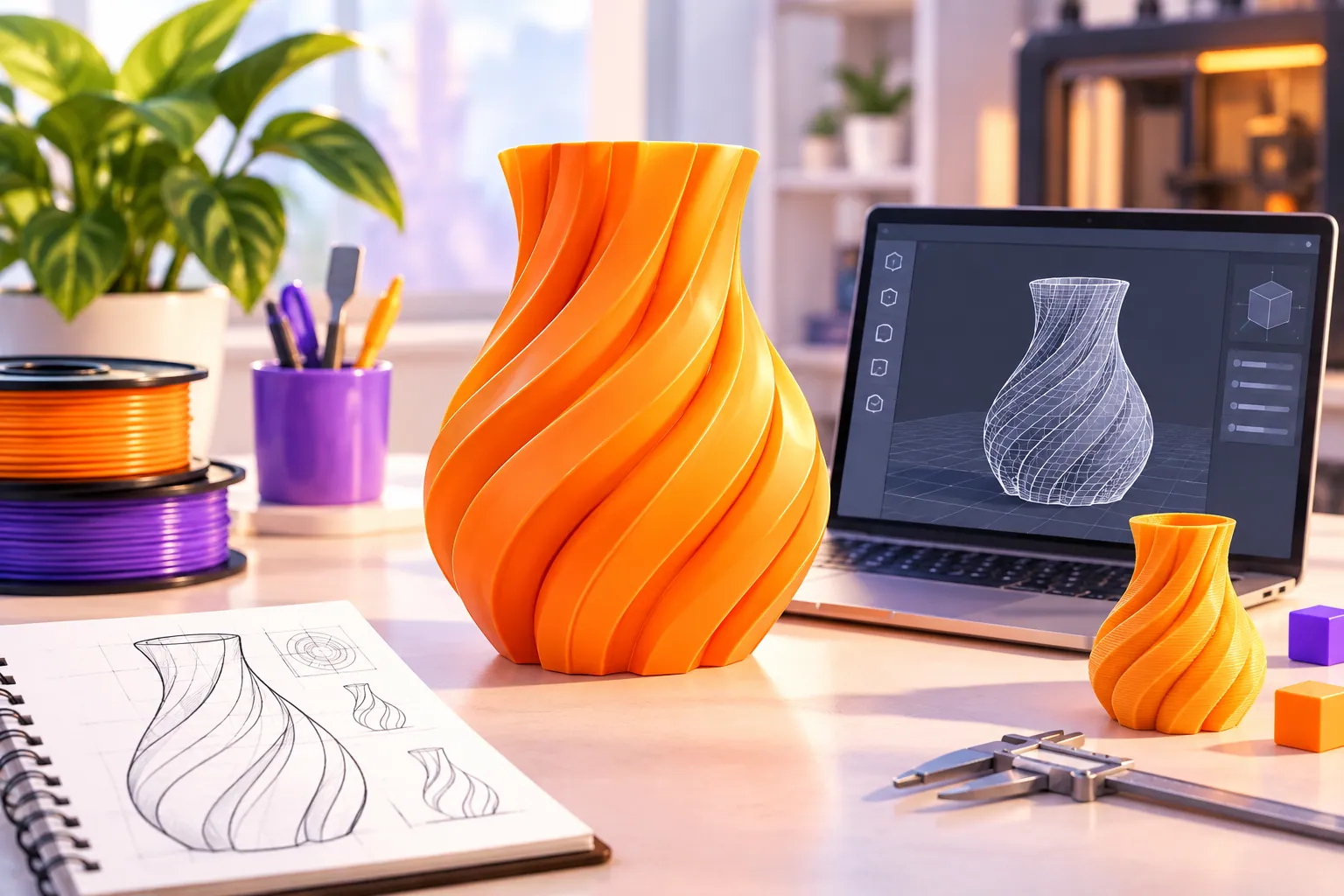
METHODOLOGY
Define its purpose, dimensions, fittings and materials. Separate aesthetic intent from functional requirements.
Create references with views and proportions that help determine shape and finish.
Build or adjust the mesh and, in OpenSCAD, define the part through code with millimeter dimensions and parameters for holes, thicknesses and fittings. Check scale and geometric continuity.
Prepare the print, evaluate the prototype and correct dimensions and fittings before the final version.
TOOLS AND DECISIONS
The combination depends on the project, available data and desired experience.
Generate 3D models from text or images to explore shapes and produce a working foundation.
Generate 3D models and textures to develop concepts and experiment with materials.
Explore shapes and views as modeling references.
3D modeling through code: millimeter dimensions, parameters and geometric operations to create precise technical parts and generate dimensional variations.
Options for editing meshes or working on dimensions and fittings according to the type of part.
Prepare layers, orientation and supports; validate a physical prototype.
FROM IDEA TO PRODUCT